Anthropic wants part of its future value to fund the public good. Why?
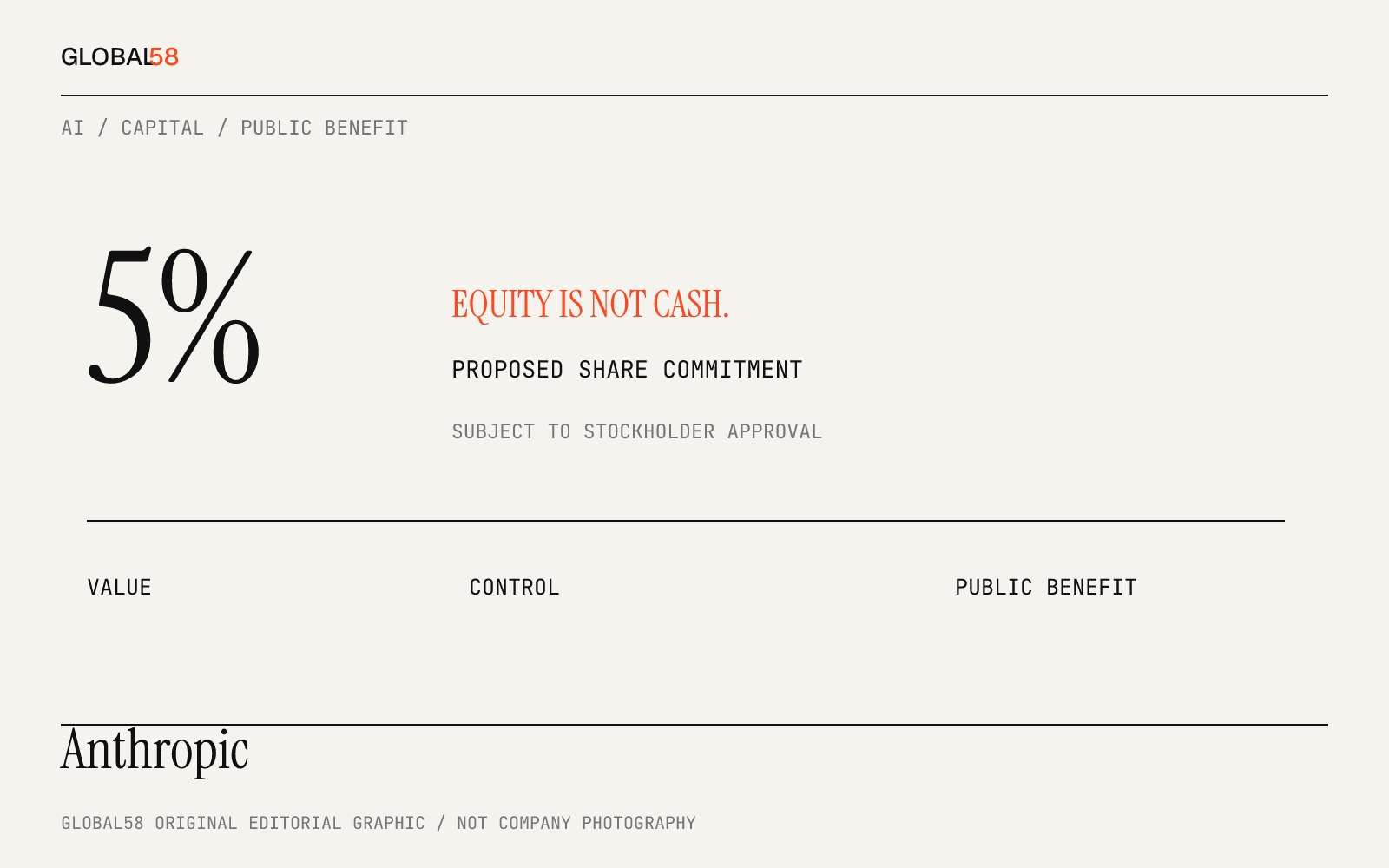
The Claude developer proposes putting 5% of its shares into a public-benefit fund, with possible increases as its value rises. Equity is not cash, and the rules governing its use are still incomplete.
A share of the company, not a cheque
An equity stake can grow with a business. A donation is money someone can spend. Anthropic’s new public-benefit proposal sits between those two ideas: tie resources intended for society to the fortunes of the company developing Claude, then work out how those resources will be used.
On 18 October, Anthropic announced plans to commit 5% of its shares to the Anthropic Public Benefit Fund, subject to stockholder approval. It also proposed additional allocations at its board’s discretion as the company’s value rises. Reuters reported the announcement the same day.
This is a commitment with an explicit condition, not evidence that an unconditional transfer has been completed. It is also not a cash donation equal to 5% of a valuation. The announcement does not give an absolute share count, a dollar allocation, realised proceeds or a spending budget. Those distinctions determine how much the public can reasonably infer from the headline.
Why create a fund when the company already has a mission?
Anthropic’s explanation separates work within the business from benefits distributed outside it. AI-safety and interpretability research, applied biomedical research and discounts for nonprofits or scientific institutions can advance its mission while also having commercial value. The company says it will continue to house that work directly inside Anthropic.
The new fund is intended to provide flexibility for other interventions. The announcement mentions large donations to traditional nonprofits and direct distributions to particular populations as possibilities. These are examples, not settled programmes with identified recipients.
The economic argument is straightforward. If AI creates substantial private wealth, a stake in the business could help support people and organisations beyond its customers and investors. The difficult part comes after that proposition: deciding whose needs count, who makes those decisions and how the value becomes resources those people can actually use.
A mechanism for sharing value is not evidence that anyone has received a benefit. The announcement establishes an intended route. It does not establish payment schedules, eligibility criteria or measurable outcomes.
Three percentages, three different meanings
The proposed initial allocation is 5% of Anthropic’s shares. The potential increase is an additional 2% at the board’s discretion for every 50% increase in company value above a set baseline. That baseline has not been disclosed. The increase is discretionary rather than automatic, so readers cannot extrapolate a guaranteed stake from a hypothetical future valuation.
A third figure, roughly 20%, describes the company’s estimate of equity dedicated to public-good purposes when this announcement is combined with existing co-founder and employee commitments. It is not the new fund’s starting ownership, and the announcement does not present it as a ceiling.
Anthropic says its co-founders pledged 80% of their own equity holdings when the company was founded. That is not 80% of the entire company. It also says approximately half its employees participate in an equity-donation programme with company matching. Those are Anthropic’s accounts of the programmes, not an independent audit of transfers or beneficiaries.
Percentages allow the promise to be described without fixing a dollar amount. They also leave important accounting questions unresolved. The public announcement does not provide enough information to determine how the proposed stake will be implemented, the timing of any dilution or how much money will ultimately become available for distribution.
A public-benefit corporation is not a charitable fund
Anthropic is a Delaware public-benefit corporation. That describes the operating company’s corporate form, not a separate pot of charitable money. In its governance explanation, Anthropic says its directors balance stockholders’ financial interests, its stated public-benefit purpose and the interests of people materially affected by its conduct.
The proposed fund is a different structure. Anthropic says it is establishing a wholly owned limited liability company rather than a 501(c)(3) charitable organisation. Its stated reason is flexibility between different forms of giving. The announcement does not describe an independent foundation operating beyond Anthropic’s ownership; the word “fund” by itself does not establish charitable tax status, public control or an entitlement for prospective beneficiaries.
There is also a separate Long-Term Benefit Trust. Anthropic’s 2023 announcement described an independent body with special stock carrying phased-in powers to appoint and remove directors. That is a corporate-oversight mechanism, not the spending vehicle announced in October. The new announcement does not specify a role for the trust in governing the fund.
These structures address different problems. A corporate purpose guides business decisions; board-appointment rights influence oversight; a funding vehicle may direct resources outside the company. Treating all three as interchangeable would obscure the question of who controls the new commitment.
Workers are an example, not yet a beneficiary class
Anthropic points to labour-market effects as one reason for creating the fund. Its argument is that AI could generate enormous economic value while destabilising employment. That is a concern and a prediction, not a finding that this fund has already mitigated job losses.
In July, the company separately announced a $200 million Economic Futures Research Fund to support external research on interventions addressing AI’s economic impacts. Its agenda includes worker transitions, income support, workplace changes and ways to give workers a stake in AI-driven growth. The $200 million commitment is not an announced cash balance for the new Public Benefit Fund.
Likewise, the possibility of direct distributions is not a confirmed compensation programme for displaced workers. No payment amounts, locations, application procedures or eligibility rules for those distributions appear in the October announcement.
The proposal nevertheless contemplates something beyond studying disruption: a vehicle that could support interventions. Whether it becomes meaningful financial assistance will depend on later choices about resources and recipients. At present there is no published basis for telling a worker they have a claim on future payments.
The unresolved issue is control
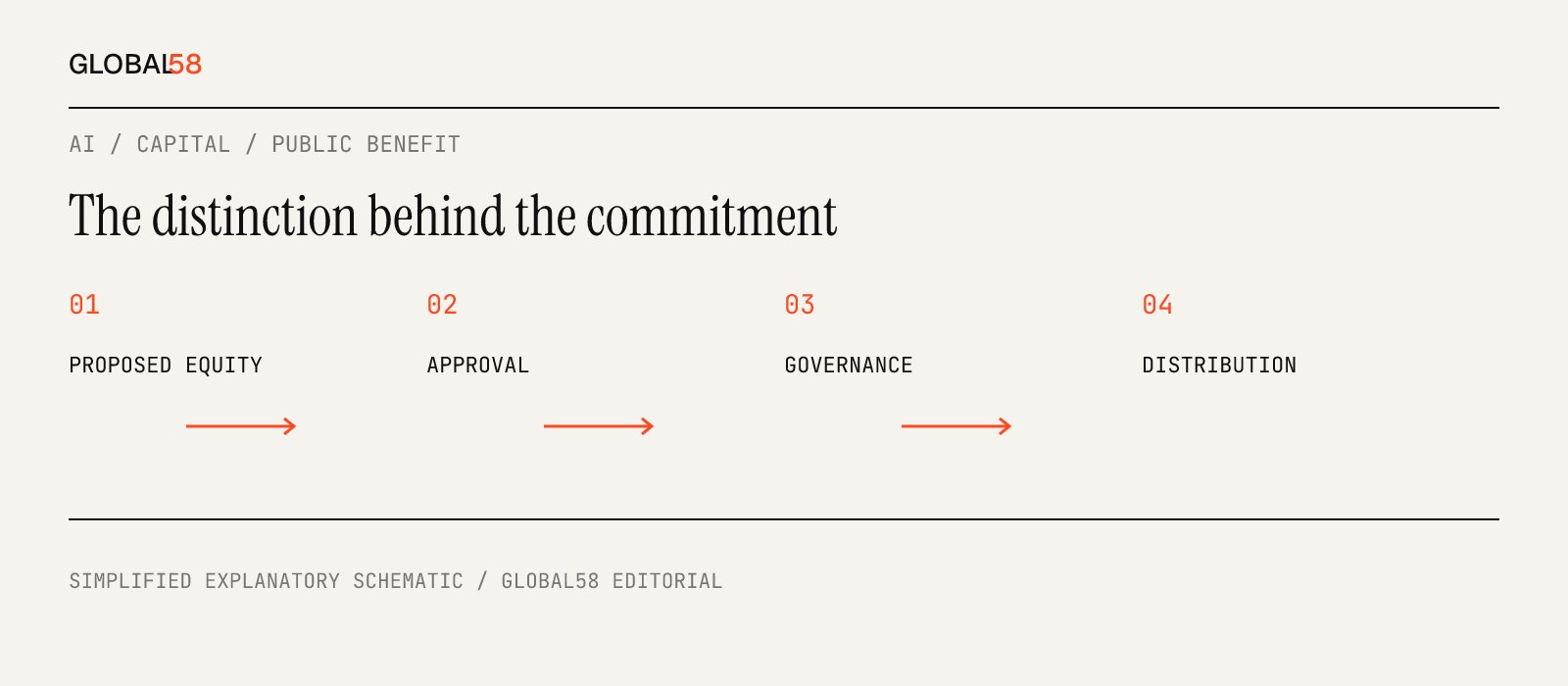
A percentage communicates ambition. Governance determines what that ambition becomes. Anthropic says it will disclose more about the fund’s structure and governance in the coming months, including valuation milestones that could increase its stake. TechCrunch’s contemporaneous reporting also identifies the unanswered question of who will decide which public benefits merit funding.
The announcement does not identify a fund governing board, beneficiary representation, independent decision-makers or a grant-selection process. It does not explain how equity will become spendable resources or what safeguards would preserve the commitment over time. A wholly owned structure makes those missing details especially relevant; ownership is not the same as outside accountability.
Anthropic does state a boundary: none of the Anthropic equity held by the LLC will be used for lobbying or political giving, in the United States or abroad. That is an explicit restriction in the announcement, but the documents reviewed do not establish how compliance will be monitored or how an outside party could challenge a decision.
These are not reasons to dismiss the proposal. They are the information needed to assess it. A large commitment can still have narrow beneficiaries, slow disbursement or weak oversight. The eventual rules will matter as much as the announced size.
Why Global58 noticed the commitment
Much discussion about valuable AI companies focuses on who owns them and how fast they can grow. This announcement raises a different business question: can an equity structure distribute some of that growth beyond the people financing and operating the company?
An equity commitment can grow with a successful business. It can also lose value or remain difficult to turn into spending power. The proposed discretionary increases preserve another choice for the board rather than establishing an automatic public share of every gain.
Anthropic frames the proposal as directing equity towards public benefit instead of escalating executive compensation. That is its rationale, not independently demonstrated evidence of compensation forgone. Our interest is in whether the eventual mechanism creates durable resources, credible decisions and demonstrable benefits outside the business, not in accepting a corporate mission as an outcome.
What would make it accountable?
The next milestones are specific: stockholder approval, confirmation of the allocation, disclosure of the valuation baseline and growth triggers, and publication of governance arrangements. Anthropic also promises an upcoming public-benefit report describing progress against its mission.
After that come the practical questions: who receives support, how much is distributed, when payments begin and how results are evaluated. Those are the tests that would turn a financing proposal into an observable public benefit.
A public reporting framework would also help separate resources dedicated on paper from resources deployed. Readers would need to distinguish equity allocated, equity still held, money realised and money spent. The announcement does not yet supply that account. These are proposed standards for assessing the mechanism, not requirements Anthropic has said it will meet.
The company’s existing mission and the fund’s future activities should likewise be assessed separately. Useful safety research within the business would not by itself demonstrate that the fund distributed support. A distribution would not resolve every question about the effects of Anthropic’s products. The attraction of an equity-backed fund is that it creates a potential link between commercial growth and external benefit; the risk is treating that link as an outcome before the decisions and transfers occur.
For now, the verified development is consequential but bounded. Anthropic has announced a conditional mechanism intended to dedicate part of its equity, and potentially a growing portion, to public-benefit purposes. It has not established that 5% of its value has been paid to the public, that an independent organisation controls the resources or that workers are entitled to payments. Keeping those differences visible is the starting point for taking the proposal seriously.
See something that needs correcting? Contact the Global58 editorial team.